

F-150 Lightning vs. Mach-E Road Trip Charging Plan

An electric Ford can handle a real road trip without turning every stop into a stressful calculation. The key is planning for charging, weather, cargo, and a backup location before you leave.
An Electric Ford Comparison should focus on how you actually drive, not only a range figure on a window sticker. Compare the Ford F-150 Lightning and Ford Mustang Mach-E based on your daily driving needs. This vehicle comparison also helps when moving between gas vehicles, hybrid vehicles, a Plug-in Hybrid, and electric vehicles. Rear-wheel drive is one consideration, depending on the model and configuration.
Key Takeaways
Compare the Ford F-150 Lightning and Mustang Mach-E based on daily driving, passenger needs, cargo, towing, and charging access—not range alone.
Plan DC fast-charging stops in advance, confirm station status, and identify at least one backup charger for each leg.
Keep a 20 to 30 percent range buffer for highway travel, with a larger reserve for winter weather, heavy cargo, towing, or strong headwinds.
Home Level 2 charging can simplify trip preparation, while charging during meals, errands, or breaks can make public charging more convenient.
The Mach-E suits drivers seeking an electric SUV for passenger usability and everyday travel, while the F-150 Lightning fits shoppers who need truck capability, a bed, or towing capacity.
Road-Tripping an F-150 Lightning or Mustang Mach-E Starts With the Right Plan
Start with the vehicle's range estimate, then leave room for conditions ahead. Electric vehicles can show different available miles as speed, wind, temperature, passenger load, cargo, and route changes affect efficiency.
Ford navigation and connected features can help identify charging options. Still, check current station status in the vehicle app or charging app before departure, since occupied or offline chargers can change a route quickly.
Choose the model that fits your miles, passengers, and cargo
The Ford Mustang Mach-E suits commuters, couples, and families who want an electric SUV that's easy to park, comfortable, and designed with interior comfort in mind. The Ford F-150 Lightning fits drivers who need a truck bed, generous cabin space, towing capacity, or available Pro Power Onboard features.
A useful electric Ford comparison considers your daily routine, longest trips, and maintenance costs. Trim levels, battery capacity, fuel economy estimates, cargo volume, horsepower and torque, and available dual electric motors vary by configuration. All-wheel drive can improve traction, while rear-wheel drive may support efficiency. These choices can also affect driving range. A Plug-in Hybrid may suit shoppers whose driving patterns don't fit a fully electric vehicle.
Shoppers can also review a 2026 Mach-E Premium in Ames, which lists an 11 kW AC onboard charger and up to 150 kW DC charging capability.
Build a route around dependable fast chargers
Map DC fast chargers before leaving home, then identify at least one alternate station near each planned stop. Check connector compatibility, recent availability reports, and the distance to the next charger.
Keep a safety buffer instead of aiming to arrive with almost no range. FordPass can connect drivers to the BlueOval Charge Network, while EV charging solutions in Ames can help shoppers understand public and home charging options. A backup charger matters most on rural stretches, where one unavailable station can turn a minor delay into a long wait.
Your Practical Charging Plan for an Electric Ford Road Trip
A good road-trip plan keeps the battery in a useful range and matches charging stops with breaks you already need. You don't have to drain the battery or wait for a full charge at every stop.
Start at home with a full or useful charge
Home charging gives you the easiest start. Charge to a high level when your first public station is far away, the forecast is cold, or you expect to carry extra cargo.
Level 1 charging uses a standard household outlet and adds energy slowly. Level 2 charging requires dedicated equipment and makes home charging more practical for overnight preparation. Before relying on either setup, confirm the outlet, charging equipment, electrical capacity, connector, and any needed adapter.
Iowa shoppers can review home EV charging in Iowa before arranging installation. Electrical work, permits, and parking layout all deserve attention before delivery day.
Use a 20 to 30 percent buffer for highway travel
For highway driving, treat a 20 to 30 percent battery buffer as practical planning guidance. That reserve gives you options if traffic builds, weather worsens, a headwind develops, or your first charging choice isn't available.
Plan the next stop while you can still reach an alternate location. Don't wait until the display reaches a critical level. In an F-150 Lightning, towing or hauling a heavy load calls for shorter charging intervals and a larger reserve.
Charge while you eat, shop, or take a break
DC fast-charging works best when it fits a meal, restroom stop, or quick errand. Temperature and state of charge affect the battery pack's charging speed.
Charging speed usually slows as the battery fills. Therefore, several shorter stops can be more practical than waiting for a full battery. Move your Ford when charging finishes, both to free the space for others and to avoid idle fees where they apply.
Make the Trip Easier With Weather, Cost, and Backup Planning
The details around charging often decide whether a trip feels relaxed. Iowa drivers should plan carefully for winter cold, open-road wind, and longer distances between towns.
Prepare for Iowa winters and changing road conditions
Cold weather can reduce efficiency and slow charging until the battery warms. When possible, precondition the cabin and battery while the vehicle remains plugged in at home.
Pack for a delay, check road conditions before leaving, and reduce highway speed when conditions allow. Winter travel requires more conservative planning, especially when a Lightning is carrying a full load near its towing capacity.
Estimate charging costs before you leave
Home electricity rates and public DC fast-charging prices aren't the same. A public station may bill by kilowatt-hour, time, or a session fee, and pricing can vary by location.
Check the price before plugging in, then account for membership discounts and possible idle fees. Different powertrains produce different bills, so compare electric vehicles with gas vehicles, hybrid vehicles, and a Plug-in Hybrid using fuel and charging costs. Fuel economy alone can mislead because MPGe vs MPG uses different efficiency measures. A federal tax credit may affect ownership costs, but eligibility and rules can change. Calculate cost per mile using home electricity, public charging, and fuel prices.
Keep a backup when the first charger is not available
Before each leg, confirm the next station in your vehicle or charging app. Keep your battery buffer intact, and use a nearby slower charger if that is the safest option.
Don't rely on one charger at the end of a long rural stretch. If the remaining range becomes too low, contact roadside assistance before the battery reaches a critical level. A calm backup plan is more useful than trying to stretch every last mile.
Frequently Asked Questions
Which is better for a road trip, the F-150 Lightning or Mustang Mach-E?
The Mustang Mach-E is generally easier to manage for passengers, everyday cargo, and efficient highway travel. The F-150 Lightning is a better fit when you need a truck bed, towing capacity, or additional truck utility.
How much battery range should I keep as a buffer?
A 20 to 30 percent battery buffer is practical for highway travel. Keep more reserve when driving in cold weather, carrying heavy cargo, towing, facing strong headwinds, or traveling through areas with limited charging.
How should I plan charging stops for an electric Ford?
Map DC fast chargers before departure, check current availability, and identify an alternate station near each planned stop. Charge while eating, using the restroom, or completing an errand instead of waiting for a full battery at every stop.
Is home charging useful before a road trip?
Yes. Level 2 home charging can prepare the vehicle overnight and provide a convenient starting charge for the trip. Confirm the outlet, electrical capacity, charging equipment, connector, and installation requirements before relying on the setup.
Does cold weather affect electric Ford road trips?
Cold temperatures can reduce efficiency and slow charging until the battery warms. Precondition the cabin and battery while plugged in, check road conditions, and plan more conservatively for winter travel.
Final Thoughts
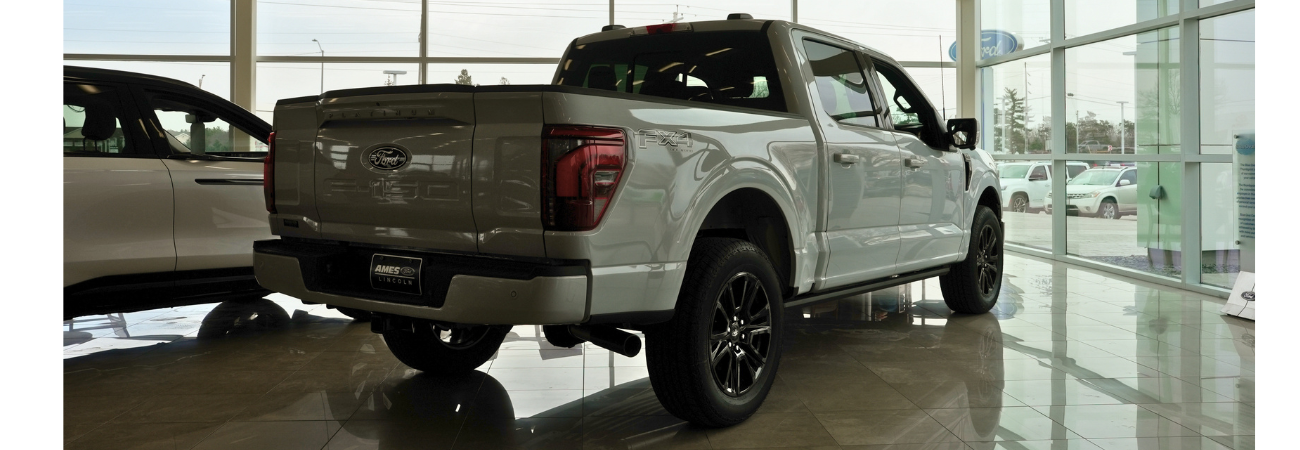
Road-tripping a Ford F-150 Lightning or Ford Mustang Mach-E is manageable when you start with a useful charge, choose dependable stops, maintain a range buffer, and adjust for weather and cargo. The Mach-E suits drivers prioritizing passenger usability, cargo volume, and all-wheel drive, while the Lightning fits shoppers who value truck capability and may prefer rear-wheel drive.
Ames Ford has both options and can help Iowa drivers compare maintenance costs and find an electric Ford vehicle that fits everyday miles and weekend plans. Shoppers moving from gas vehicles or a Plug-in Hybrid may also consider other electric vehicles, including the Chevrolet Silverado EV.