

Non-Commission Car Buying: What to Expect
If car buying makes your stomach tighten, you’re not alone. For a lot of people, the stress isn’t the car, it’s the pressure, the back-and-forth, and the fear of agreeing to something you don’t fully understand.
Non-commission car buying is meant to feel different. In plain terms, it means the person helping you isn’t paid based on the size of your deal. Their paycheck doesn’t hinge on whether you say yes today, add extras, or stretch your budget.
This guide walks you through what non-commission means (and what it doesn’t), how the process usually flows, and how to prepare so you walk in with a plan and leave with peace of mind.

What non-commission car buying means (and what it does not)
In a non-commission model, the person you work with is often paid a salary or an hourly wage, sometimes with team-based bonuses tied to overall store performance or customer satisfaction. The big idea is simple: their income isn’t tied to your specific purchase.
That shift changes the tone. It can mean fewer “closing” tactics, less urgency, and more focus on matching you with the right vehicle and options.
It does not mean:
The dealership isn’t making money.
You shouldn’t ask questions or request details in writing.
The numbers don’t matter.
You can still negotiate in many cases, and you can always ask for clarity. What changes most is the incentive structure and the pace of the conversation.
You may hear different labels for similar approaches:
Price-first: The price is presented early, sometimes with fewer pricing “layers.”
One-price (or one-person, one-price): Pricing is set, with limited or no negotiation.
Product specialist: A role that focuses on the vehicle, features, and fit, not “selling” in the traditional sense.
Team-based store: You may talk to more than one person (advisor, finance, delivery), with less dependence on a single salesperson.
Different dealerships use different terms, so it’s okay to ask, “How are you paid?” or “How does pricing work here?” That question alone can lower your stress because you’ll know what kind of conversation you’re walking into.
How the experience feels different for nervous shoppers
For anxious shoppers, the difference is often felt in the small moments.
You may notice:
Fewer rapid-fire questions that push you toward a decision.
More time to look, sit in the vehicle, and think.
Clearer next steps, like “Here’s what we’d do next if you want to move forward.”
Less back-and-forth that makes numbers feel like a moving target.
You also get more room to say things like, “I need to sleep on it,” or “Can I take this home to review?” without getting the cold-shoulder vibe.
And yes, your questions are welcome. Even the ones you think are “basic.” A calm process should make space for learning.
Common myths about non-commission sales (quick reality check)
Misunderstandings can make shoppers uneasy, so here are a few quick clarifiers.
Myth: Non-commission means no profit.
Reality: A dealership still has costs and still earns profit. The difference is how staff are paid, not whether the business makes money.
Myth: It means you can’t negotiate, ever.
Reality: Some stores use fixed pricing, some don’t. Either way, you can always ask for a better deal, request clearer fees, or compare offers.
Myth: You can’t get trade-in help.
Reality: Trades are still part of the process, and a fair store should explain how the value was calculated.
Myth: Financing is always worse.
Reality: Your rate depends on credit, term length, lender programs, and the vehicle. A non-commission setup doesn’t automatically mean higher rates.
Myth: You’ll be rushed through paperwork.
Reality: Paperwork speed depends on the store and the day. A low-pressure team should slow down when you ask, and they should explain what you’re signing.
How the non-commission car buying process works, step by step
A good non-commission experience tends to follow a predictable path. You stay in control of the timeline, your budget limits, and the final yes or no. The dealership’s job is to explain options clearly and put everything in writing.
Step 1: Share your needs and budget without feeling boxed in
Most advisors will ask questions to narrow the field, not to trap you.
Expect topics like:
Your daily drive (city, highway, short trips, long commute)
Passenger needs (kids, carpools, pets, car seats)
Weather and road conditions
Features you care about (heated seats, AWD, safety tech, towing)
Budget comfort (monthly payment range, down payment range, or total out-the-door limit)
It helps to separate needs from nice-to-haves.
A simple example:
Needs: “Fits two car seats,” “blind-spot monitoring,” “under 60,000 miles.”
Nice-to-haves: “Sunroof,” “premium audio,” “leather seats.”
Tip if stress makes you forget things: write your list on your phone before you arrive. When anxiety spikes, memory gets slippery. A short note keeps you steady.
Step 2: Explore options and compare trims without pressure
Once your needs are clear, a good advisor usually narrows choices to two or three vehicles. That’s enough to compare without feeling like you’re speed-dating a whole parking lot.
You’ll also hear about trims. A trim is the version of the same model, like “base” vs “premium,” with different features and sometimes different engines. Packages are add-ons that bundle features together.
To keep comparisons simple, focus on:
Safety features: emergency braking, lane-keeping assist, blind-spot alerts
Comfort and space: seat comfort, rear legroom, cargo layout
Tech: phone pairing, screen size, backup camera quality
Fuel costs: mpg, hybrid vs gas, how you actually drive
Warranty coverage: what’s covered, and for how long
Ask for a printed or emailed summary of the options you discussed. Reading it at home, without the showroom noise, can make your decision feel obvious.
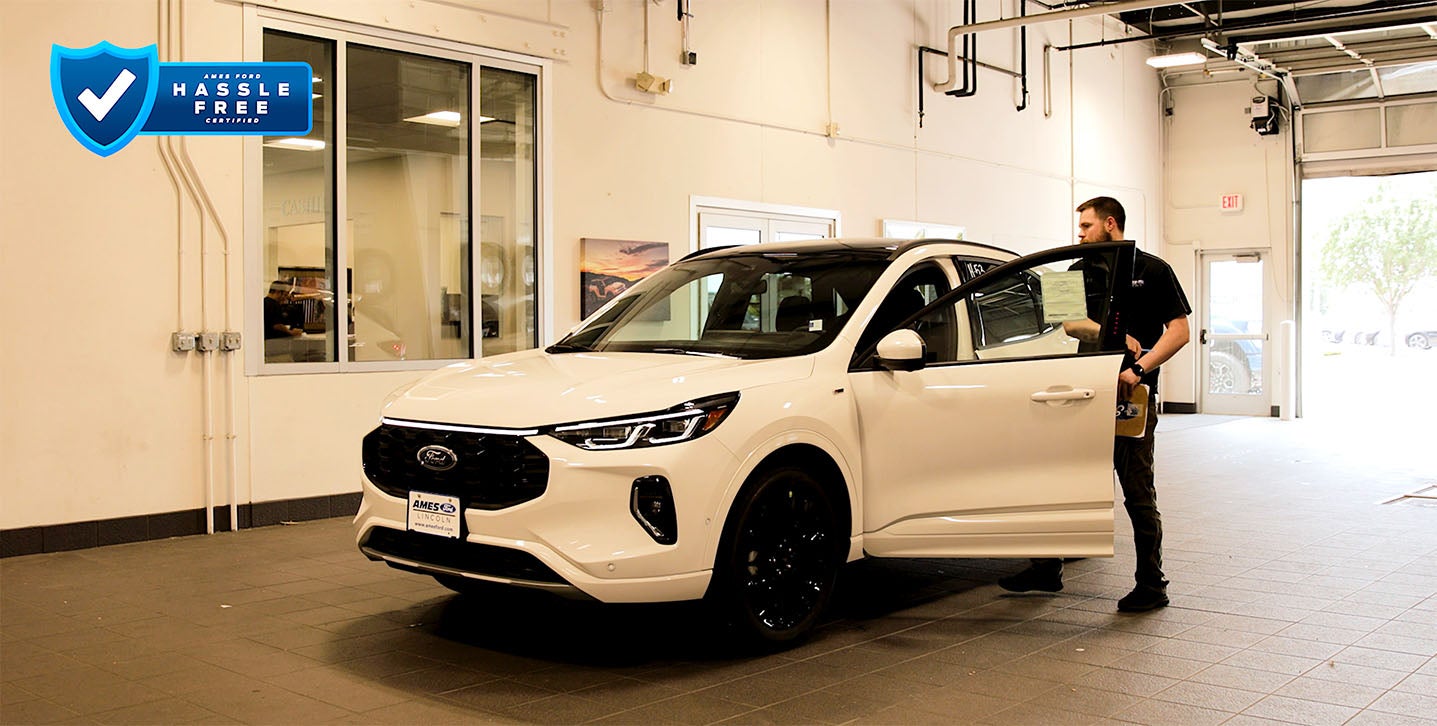
Step 3: Test drive in a way that answers real questions
A test drive should answer the questions that matter in your real life, not just “Does it go?”
A simple plan:
Comfort check first: seat position, pedal reach, steering wheel fit.
Visibility: blind spots, mirror view, backup camera clarity.
Parking feel: tight turns, parking lot maneuvering.
Braking: smooth stops, no pulling, predictable pedal feel.
Highway merge: acceleration, confidence getting up to speed.
Noise: road noise, wind noise, how it feels at 60 mph.
If you get anxious while driving, it’s okay to pause. Take a breath, pull into a quiet lot, switch drivers, or shorten the loop. You’re allowed to drive it twice. You’re also allowed to say, “This one doesn’t feel right,” even if the numbers look great.
If a car seat, stroller, or work gear is part of your life, bring it. The best test is the one that matches your Monday morning.
Step 4: Review the numbers with fewer surprises
This is where many people feel stress, because the language can get muddy. Keep it clear by asking for an itemized breakdown.
At a minimum, you should understand:
Vehicle price
Sales tax
Fees (ask what each fee is for)
Trade-in value (if applicable)
Down payment
Interest rate (APR)
Term length (loan months)
Estimated monthly payment
Total cost over time (price plus interest)
Step 5: Trade-in, financing, and paperwork, what to expect
Trade-in appraisal is usually based on condition, mileage, vehicle history, and market data (what similar vehicles are selling for). Small things matter, like tire condition and windshield chips, but honesty matters more. If you know a repair is needed, say so. It builds trust and prevents last-minute changes.
Financing typically works like this:
You fill out a credit application.
The dealership checks lender options.
You’re offered a rate and term based on your credit, the vehicle, and the loan length.
You may also be offered optional add-ons, like gap coverage (often called GAP) or an extended service plan. The key word is optional. It’s fine to say, “Not today,” or “Can you show me the cost and what it covers in writing?” If it’s valuable, it will hold up under a calm explanation.
Timing can vary. Paperwork might take 30 minutes, or it might take longer on a busy day. Bring patience, but also protect your energy. If you’re tired, it’s okay to schedule delivery for another day.
How to prep for a smooth, low-stress car buying day
Preparation doesn’t have to be intense. Think of it like packing before a trip. You’re not trying to control everything, you’re trying to avoid avoidable stress.
Before you go: simple homework that saves time and stress
Focus on the few steps that have the biggest payoff.
Know your budget boundary: Pick an out-the-door max or a payment max, then decide your top term length.
Check your credit comfort level: You don’t need a perfect score, you just need to know where you stand.
Estimate insurance costs: Some vehicles cost more to insure than people expect.
Pick two to three models to compare in person.
Shopping alone can feel calmer because you control the room. Bringing support can help if your anxiety spikes. If you bring someone, choose a steady person, not someone who treats it like a debate club.
What to bring: documents and info most buyers forget
Having the right items prevents extra trips and keeps your day from dragging.
Bring:
Driver’s license
Proof of insurance
Current vehicle registration
All trade-in keys and key fobs
Payoff information for your current loan (if you still owe)
Title (if you own the vehicle outright)
Proof of residence (often a utility bill or similar)
Recent pay stubs (only if needed for certain approvals)
Your question list (on paper or in your phone)
Requirements can vary by lender and situation. A quick call ahead can confirm what you need and save a lot of frustration.
Conclusion
Non-commission car buying is designed to feel calmer because the person helping you isn’t paid based on your specific deal. The process still includes the same core steps, choosing the right vehicle, test driving, reviewing the numbers, and handling financing and paperwork, but the tone is often more steady and less pushy. Prep a short list, bring the right documents, and keep a few ready-to-use questions on your phone. Most important, give yourself permission to take your time, a smart decision rarely needs to be rushed.